
You're Up at 3am Again, Wondering What's Wrong With Your Baby's or Toddler's Sleep
Get better sleep from baby to toddler—without another rigid method and strict schedule. Get guidance from a pediatric physical therapist in short, easy-to-follow modules and start with what your child needs tonight—and know exactly what to do next.
.
Watch This To Learn More
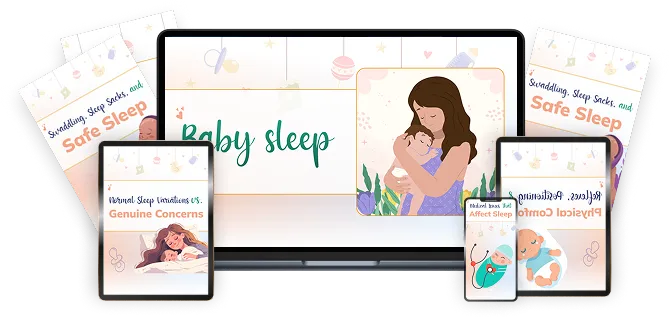
START HERE
Get Your Baby's Sleep, Without the Panic


“This was the first time someone looked at my child as an individual, not a checklist.”
Annie T ★★★★★
I am not a sleep coach who took a simple certification. I am a licensed pediatric physical therapist—trained to clinically evaluate how babies and toddlers move, develop and regulate. Sleep struggles are connected to all three. That's the piece that most sleep programs miss and I made this easy for your to use right now.—start with what you're seeing in your child, go to the short module that fits, and know what to do next.
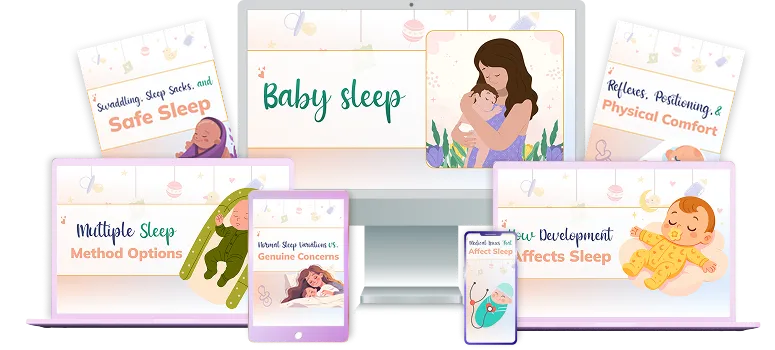
Only $27($97)
Start Tonight.
Get Immediate Access to the Complete Program


30-day money back guarantee
100% Secure 256-Bit Encrypted Checkout
From:
Lisa Lazor
PT, DHSc, MTC
Pediatric Physical Therapist
Specialization: Birth-to-3 Development & Early Intervention
If you've ever Googled "why won't my baby sleep" at 3am...
If you've read conflicting advice about sleep training and felt paralyzed about what to do...
If you've wondered whether your baby's or toddler's sleep is normal or a sign of something wrong...well I have created this program for you.
Most sleep advice out there comes from someone who got their own baby to sleep once--or read enough about sleep to write a guide on the topic. I am an expert, a pediatric physical therapist with 20 years specializing in birth to three development. I am not guessing at what might work. I am looking at what is actually happening with your baby's or toddler's sleep, movement, and development together—because they are absolutely connected.
Understanding this isn't the extra step before your infant or toddler sleeps better—it's what makes the fix actually work, and work fast.
Sleep doesn't happen separately from development.
That's why I created Baby Sleep, Without the Panic--to help parents understand what's happening before automatically assuming their baby needs another sleep-training method.

The Pattern I See Almost Daily

Last week, I saw a mother with her 6-month-old son. She hadn't slept more than two hours at a stretch in months.
She'd tried three different sleep training methods. None of them worked. Then she saw a video suggesting that babies who don't sleep through the night by 6 months, might have sensory or developmental problems.
Now she wasn't just exhausted. She was convinced something was wrong with her baby.
I evaluated her son. Developmentally, he was doing great. His sleep? Completely normal for a 6-month-old who was going through a growth spurt and learning to sit up.
And I see versions of this pattern again and again: exhausted parents trying method after method without first understanding other factors, what's normal, what may be affecting sleep, and what their individual baby actually needs.
What You're Actually Dealing With
If you're reading this, you probably recognize this pattern:
You've probably been given plenty of sleep advice.
The problem is that you've been given methods before understanding.
Your baby's age, developmental stage, movement, sensory needs, feeding, environment, temperament and routines can all influence sleep. A method that makes sense for one baby may make absolutely no sense for another baby.
That's the missing piece: understanding your baby first, then deciding what needs to change.
That's exactly what Baby Sleep, Without the Panic helps you fix, fast.

The Real Problem
You've Been Told There's One "Right" Way to Handle Sleep,
But Every Baby Is Different.
Sleep isn't controlled by one or two sleep methods.
Your baby's development, temperament, reflexes, physical comfort, feeding, environment and biology can all influence how they sleep.
That's why one baby may respond beautifully to a gradual sleep method, while another needs a completely different approach--and another may simply need time to reach the next developmental stage.
The goal isn't to force your baby into a sleep method that doesn't fit. Once you know what's actually driving your baby's sleep, the fix is fast--and that's exactly what I'm going to show you.
My Background
I've Spent 20 Years Watching Parents Panic About Normal Sleep, And I Finally Understood What They Actually Need
I've been a pediatric physical therapist for 20 years, specializing in birth-to-three development and early intervention.
I've worked with over 3,000 families navigating sleep challenges. I've seen babies with genuine medical issues affecting sleep. And I've seen far more babies whose sleep is completely normal but whose parents are exhausted and anxious.
Again, the problem wasn't lack of sleep methods.
Parents had tried multiple methods, too many, actually. The problem was that they didn't understand how sleep actually works developmentally.
They didn't know that sleep patterns change as babies develop new skills.
They didn't know that reflexes affect sleep positioning.
They didn't know that what's normal at 3 months looks different at 6 months and different again
at 9 months.
They didn't need another sleep training method. They needed the right one for their baby--and once they had it, things changed fast.
What Parents Actually Need

They needed to understand how development affects sleep, so they could tell the difference between "my baby needs some additional confidence" and "my baby needs support--and know exactly what to do next."
They needed to know about reflexes. movement and positioning, so they could fix their baby's positioning fast, not guess at it.
They needed to understand normal sleep variations, so they could stop panicking the moment their baby's sleep changed.
They needed multiple method options, not just one or two rigid methods, so they could find what actually works for their baby fast, instead of forcing a method that doesn't fit.
When they get this context, parents relax.
They'd say, "No one ever explained it this way before."
They'd leave my office with the same baby they'd brought in worried about,
but they saw their baby's sleep differently.
So let me give that gift to you!
The Foundation

Sleep Changes as Your Baby or Toddler Develops, What's Normal at
One Stage Looks Different at Another Stage
Most parents don't know this about baby sleep, and it changes everything once they do.
Baby sleep doesn't follow a straight line. It doesn't look the same at every age. And it's deeply connected to what's happening developmentally.
When your baby is learning to roll, their sleep might get worse before it gets better. When they're going through a growth spurt, they might wake more frequently. When a reflex is integrating, their sleep positioning needs might change. That's why fixing sleep starts with knowing what's going on developmentally--skip that step, and you're guessing.
This isn't a sleep problem. This is normal development affecting sleep and yes, it can be addressed.
But if you've been told your baby "should" be sleeping a certain way by a certain age, you're going to think something's wrong when developmental changes disrupt sleep.
What Affects Baby Sleep
Development:
When babies are learning new skills (physical, communication, social and cognitive), their brains are processing so much that sleep often gets disrupted. This is temporary and normal--and once you know what's driving it, there's a specific way to support it.
Reflexes:
Primitive reflexes affect how comfortable babies are in certain positions. The Moro reflex, for example, is why swaddling helps some babies sleep better. As reflexes integrate, sleep positioning needs change as your baby becomes a toddler.
Temperament:
Some babies and toddlers are naturally more sensitive to stimulation. Some need more help settling. Some are more adaptable to changes. This affects which sleep approaches work for them.
Physical comfort:
Reflux, gas, teething, illness, feeding--all of these affect sleep. Sometimes what looks like a sleep problem is actually a comfort issue.
Individual biology:
Some babies and toddlers genuinely need less sleep than others. Some are naturally early risers. Some take longer to develop mature sleep patterns.
None of these are problems. They're variations. But without context, variations feel like failures.

The Difference Between Normal Sleep and Genuine Concern
Now, I'm not saying that sleep problems don't exist. They do and this is one of the main reasons that I want to share this information.
When there are genuine medical or developmental issues affecting sleep, identifying and addresing them can make a significant difference. Sometimes that means getting your baby to the right specialist.
But most of what parents worry about is normal developmental sleep variation, not a medical problem--and once you know what's actually going on, choosing the right method for your baby or toddler becomes a lot easier.
Genuine sleep concerns usually involve other symptoms beyond just not sleeping well. They might include significant reflux, breathing issues during sleep, extreme difficulty with any sleep, or developmental concerns in other areas.
If your baby's sleep changes when they're learning new skills, that's usually developmental, not a problem, but this can be supported to allow your baby to gain the confidence that they need to sleep.
And once you know the difference, choosing the right method--and knowing exactly what your baby needs--becomes fast and clear.
The Solution
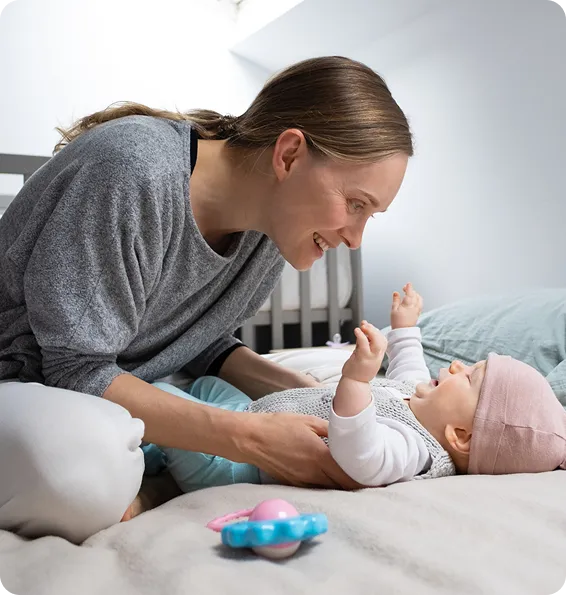
Baby Sleep, Without the Panic is what I wish every exhausted parent had from day one.
It's the same framework I use in my practice when I'm helping parents understand their baby's sleep. The same context that makes the anxiety lift. The same lens that turns panic into clarity.
Instead of forcing one method to fit every baby, you'll learn how development and routines affect sleep.
Then I'll walk you through the different sleep approaches so you can know which strategies may fit your baby, when to use them, and how to adjust them as your baby changes.
The goal? Better sleep for your baby--and more confidence and rest for you.
What You Get
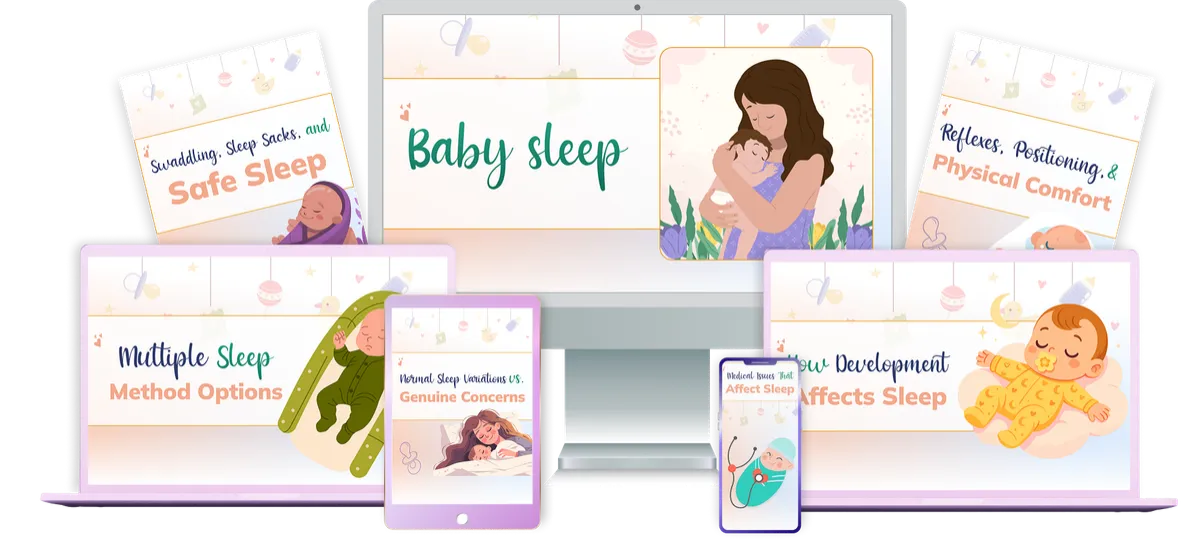
Everything You Need to Understand Your Baby's Sleep, Without the Panic or One-Size-Fits-All Methods
Here's what you get with Baby Sleep, Without the Panic:
The Core Modules and Videos
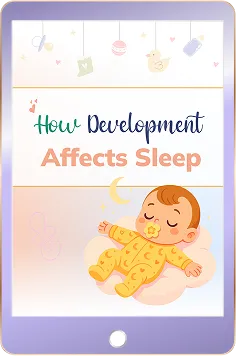
Module 1: How Development Affects Sleep
$89 Value
Why sleep patterns change as your baby grows.
What’s developmentally normal at different stages (birth to three).
Five areas of development and how they are all connected to sleep.
Why sleep feels so hard right now and what this means for your baby.
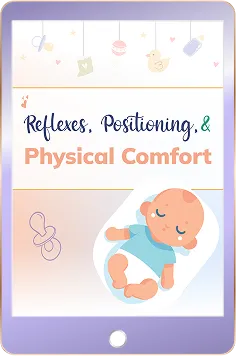
Module 2: Self Soothing, Reflexes, Positioning, and Physical Comfort
$69 Value
How primitive reflexes influence settling and sleep in infants and how motor skills and sensory needs affect sleep in toddlers.
Positioning and other methods that supports comfort and regulation.
When reflex-related sleep disruptions tend to ease and how soothing is incorporated.
What matters physically, and what you can do now to improve sleep.
Module 3: Feeding, Digestion and Impact on Sleep
$79 Value
Common sleep problems that can be impacted by feeding.
Signs that suggest adjustment versus medical evaluation (yes, the one medical condition that I commonly see that affects sleep that is often missed).
How to tell the difference between developmental phases and concerns.
When to wait, when to support, and when to seek outside help.
Module 4: Schedules, Wake Windows and Timing.
$69 Value
Understanding incorporating schedules, wake windows and timing into development and how to adjust schedules to continue to support sleep.
Understanding your infant's and toddler's cues.
Understanding overtiredness and the impact on sleep.
Age based sleep windows.
Module 5: Sleep Association and Sleep Methods.
$89 Value
Choosing the right setup for your baby or toddler.
Understanding sleep associations to allow you to choose the best method along with guidance.
Explanation of multiple methods and how they tie into development from infants to toddlers.
Making adjustments as your baby grows.
Module 6: Medical Issues, Transitions and Environment and Impact on Sleep
$79 Value
Reflux, breathing issues, and discomfort that truly impact sleep plus the one issue that most miss.
What symptoms deserve closer attention.
Understanding sleep regressions and developmental influence so you can address it now.
How to approach concerns calmly and clearly with providers and which specialists to seek for help.
How It Works
Each module includes:
Clear explanations in plain language (no sleep training jargon) with a video walking you through each section, building up material and applying it as each module progresses.
Real examples from my practice
Specific guidance for common sleep concerns
Printable resources you can reference at 3am
You can go through the modules in order, or jump to the section that addresses your current sleep challenge.
Most parents go through the core content in 90 minutes, then keep the resources for reference as their baby's sleep changes and as their baby gets older to address newer developmental changes. Remember, my program addresses both infants and toddlers.
Audience Clarity
For Exhausted Parents Who Want Better Sleep--Without Guessing What Their Baby Needs
This is NOT for you if:
Your baby has a diagnosed medical condition affecting sleep (this is educational context, not medical treatment).
You're looking for a rigid, one-size-fits-all method instead of an approach tailored to your baby or toddler.
This program is for you if:
You're a parent of a baby (birth to 3 years) who isn't sleeping well--and you're exhausted.
You've tried or read about sleep training methods that didn't work and you're still dealing with frequent waking, difficult settling, short stretches, or changing sleep patterns.
You're overwhelmed by conflicting sleep advice and who you should or should not listen to and want evidence-based guidance without fear tactics.
You want to understand how your baby's development affects their sleep and what you can do about it.
You want practical sleep strategies you can choose and adapt as your baby grows and changes.
If you're ready to stop guessing and start helping your baby sleep better, you're in the right place. You'll learn what may be affecting your baby's sleep--and what you can actually do about it.
Real Results from Real Parents

Ashley P

“This was the first time someone looked at my child as an individual, not a checklist.”

Melissa H
“I stopped blaming myself and started making changes that made sense.”

Sarah M
“I finally understood what was actually interfering with sleep.”

Jessica R
“The multiple approaches helped us choose what fit
our family.”
Baby Sleep, Without the Panic
Your Investment
Only $27 Today
One-time payment. Lifetime access. All modules, all resources, all future updates.
30-Day Money-Back Guarantee
Try the program for 30 days. If it doesn't help you better understand what's affecting your baby's sleep and give you practical strategies to improve it, email me at [email protected] and I'll refund your payment.
I'm a pediatric physical therapist, not a sleep training guru trying to sell you a method. If this doesn't help you, I am happy to refund your money.
One-time payment. Lifetime access. All modules, all resources, all future updates.
FAQ’S
Everything You Need to Know Before Getting Started
Will this program make my baby sleep through the night?
This isn't a sleep training program promising your baby will sleep through the night by a certain date--because no one can honestly promise that. What it will do is give you clarity fast: within one read and after watching the accompanying video for each module. You'll know whether what you're seeing is normal development which you can further support and enhance or something worth a closer look, and exactly what to adjust or further improve. Most parents feel the panic lift before they even finish the first module.
Is this just another sleep training method?
No. This program explains multiple sleep approaches and helps you understand which might work for your baby based on their temperament and developmental stage. It's not about forcing one method, it's about understanding your options and your baby.
What if my baby has reflux or other medical issues?
Module 6 covers medical issues that can affect sleep, including reflux, breathing concerns, and when to seek medical help. This program helps you understand what's normal variation vs. what needs medical attention. But it's not a replacement for medical care—if your baby has diagnosed medical issues, you should work with your pediatrician.
I have a four month old and a two year old. Will this work for them?
This program covers birth to 3 years, with age-specific guidance for how sleep changes at different developmental stages. Whether your baby is 2 months or 2 years, you'll find relevant information for their current stage.
I'm so tired I can barely function. Is this going to be overwhelming?
The modules are designed to be digestible even when you're exhausted. Most parents go through the core content in about 90 minutes. You can also jump straight to the section that addresses your current concern. The resources are designed for quick reference at 3am when you need them most.
How is this different from free information online?
Free information online is often conflicting, fear-based, or trying to sell you a specific method. This program gives you comprehensive, evidence-based context from a pediatric physical therapist who specializes in early development. It's organized, clear, and designed to reduce anxiety rather than create it.
Can I share this with my pediatrician?
Absolutely. Many parents find that understanding the developmental context of sleep helps them have better conversations with their pediatrician. Some have even shared the resources with their providers, who appreciate having parents who understand sleep more completely.
Your Next Step
Help Your Baby Sleep Better--With an Approach That Actually Fits Your Baby
Your baby's sleep is affecting your entire family right now.
Baby Sleep, Without the Panic gives you that understanding--and what you can actually do about it.
It's the same framework I use in my practice when I'm helping exhausted parents see their baby's sleep clearly. The same context that makes the anxiety lift. The same lens that turns panic into clarity.
You can keep Googling sleep solutions at 3am or you can keep trying methods that don't fit your baby, and start making purposeful changes, and help your baby sleep better.
— Lisa Lazor (PT, DHSc, MTC)
Pediatric Physical Therapist Birth-to-Three Development Specialist
One-time payment • Lifetime access • 30-day money-back guarantee
Terms & Conditions | Privacy Policy | Contact Us